TTR is essential for everyday health and function1-4

For HCPs

About ATTR-CM
Mechanism
of Disease
Actor portrayals.

How does TTR impact ATTR-CM?
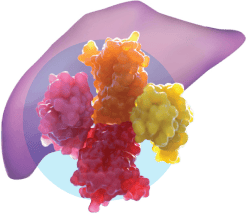
TTR is a key transport protein synthesized in the liver.
TTR, also known as prealbumin, supports the transport of:

Vitamin A (retinol)
Important for:
- Vision
- Immunity
- Neurologic function
Vitamin A deficiency can lead to ocular symptoms such as night blindness (nyctalopia).5

Thyroxine (T4)
A hormone important for:
- Metabolic regulation
- Heart function
- Cognitive function6
TTR stability is vital to cardiac and overall health.
It performs its function only when present and stable.7
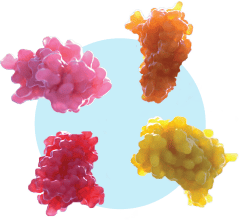
Loss of TTR stability is the initial event in ATTR-CM
Unstable TTR may lead to ATTR-CM—a life-threatening progressive heart condition.2
There are 2 types of ATTR-CM:
Both the aging or genetic variations can cause TTR to destabilize and break apart into monomers, leading to amyloid formation and buildup.2

Wild-type ATTR-CM (ATTRwt-CM)3,8-12
- Caused by TTR destabilization due to aging
- Typically presents later in life but often remains undiagnosed for years
- Represents ~80% of the ATTR-CM population and presents with cardiac and musculoskeletal manifestations

Variant ATTR-CM (ATTRv-CM)3,8,11-15
- Caused by TTR gene mutations which influence or affect disease presentation
- May present earlier; associated with faster disease progression and more aggressive cardiac disease compared to wild-type ATTR-CM
- V122I is a common variant that occurs in 1 in 25 Black Americans
- Approximately 20% of patients with ATTR-CM have variant ATTR (ATTRv). Patients with the variant type may be more likely to present with a mixed phenotype than wild-type patients
- Mixed phenotype is characterized by cardiac, neurologic, and musculoskeletal manifestations

Variant vs Wild-Type ATTR-CM
Watch on YouTube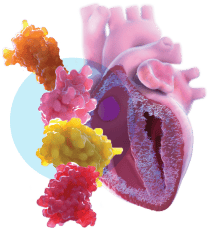
TTR instability leads to:
Misfolded monomers that aggregate into toxic amyloid fibrils1,2,16
These fibrils accumulate throughout the body, including in the myocardium.

Without timely intervention, ATTR-CM may result in17,18:
- Earlier mortality
- Increased cardiovascular‑related hospitalizations
- Significant impairment in quality of life
- Reduced functional capacity
Early diagnosis and treatment can improve outcomes for patients with ATTR-CM.19,20

Addressing Underdiagnosis in ATTR-CM
Watch on YouTubeATTR-CM=transthyretin amyloid cardiomyopathy; ATTRv=variant transthyretin-mediated amyloidosis; ATTRwt=wild-type transthyretin-mediated amyloidosis; CV=cardiovascular; THAOS=Transthyretin Amyloidosis Outcome Survey; TTR=transthyretin.
References:
- Kittleson MM, Maurer MS, Ambardekar AV, et al. Cardiac amyloidosis: evolving diagnosis and management: a scientific statement from the American Heart Association. Circulation. 2020;142(1):e7-e22. doi:10.1161/CIR.0000000000000792
- Witteles RM, Bokhari S, Damy T, et al. Screening for transthyretin amyloid cardiomyopathy in everyday practice. JACC Heart Fail. 2019;7(8):709-716. doi:10.1016/j.jchf.2019.04.010
- Brito D, Albrecht FC, de Arenaza DP, et al. World Heart Federation consensus on transthyretin amyloidosis cardiomyopathy (ATTR-CM). Glob Heart. 2023;18(1):59. doi:10.5334/gh.1262
- Kittleson MM, Ruberg FL; American College of Cardiology Solution Set Oversight Committee. 2023 ACC expert consensus decision pathway on comprehensive multidisciplinary care for the patient with cardiac amyloidosis. J Am Coll Cardiol. 2023;81(11):1076-1126. doi:10.1016/j.jacc.2022.11.022
- Ten Hulzen RD, Wagner IV, Decastro PY, Sullivan JP. Visual field decline and restoration following vitamin A therapy for vitamin A deficiency. Am J Ophthalmol Case Rep. 2022;26:101471. doi:10.1016/j.ajoc.2022.101471
- Schroeder AC, Privalsky ML. Thyroid hormones, t3 and t4, in the brain. Front Endocrinol (Lausanne). 2014;5:40. doi:10.3389/fendo.2014.00040
- Gertz MA, Aras MA, Bart N, et al. Unravelling the myriad physiologic roles of transthyretin: critical considerations for treating transthyretin amyloidosis. Ann Med. 2025;57(1):2536755. doi:10.1080/07853890.2025.2536755
- Hornstrup LS, Frikke-Schmidt R, Nordestgaard BG, Tybjærg-Hansen A. Genetic stabilization of transthyretin, cerebrovascular disease, and life expectancy. Arterioscler Thromb Vasc Biol. 2013;33(6):1441-1447. doi:10.1161/ATVBAHA.113.301273
- Gentile L, Coelho T, Dispenzieri A, et al; THAOS investigators. A 15-year consolidated overview of data in over 6000 patients from the Transthyretin Amyloidosis Outcomes Survey (THAOS). Orphanet J Rare Dis. 2023;18(1):350. doi: 10.1186/s13023-023-02962-5
- Formiga F, Saumell Baeza L, Chivite D, Yun S. Musculoskeletal co-morbidities in patients with transthyretin amyloid cardiomyopathy: a systematic review. ESC Heart Fail. 2024;11(2):662-671. doi:10.1002/ehf2.14622
- Porcari A, Fontana M, Gillmore JD, et al. Prevalence, characteristics and outcomes of older patients with hereditary versus wild-type transthyretin amyloid cardiomyopathy. Eur J Heart Fail. 2023;25(4):575-524. doi:70.7002/ejhf.2776
- Poli L, Labella B, Cotti Piccinelli S, et al. Hereditary transthyretin amyloidosis: a comprehensive review with a focus on peripheral neuropathy. Front Neurol. 2023;74:7-76. doi:10.3389/fneur.2023.1242815
- Vanhentenrijk S, Grodin JL, Tang WHW. Hereditary transthyretin cardiac amyloidosis. Circ Heart Fail. 2025;18:e012469. doi:10.1161/CIRCHEARTFAILURE.124.012469
- Damy T, Kristen AV, Suhr OB. Transthyretin cardiac amyloidosis in continental Western Europe: an insight through the Transthyretin Amyloidosis Outcomes Survey (THAOS). Eur Heart J. 2022;43:391-400. doi:10.1093/eurheartj/ehz173
- Quarta CC, Buxbaum JN, Shah AM, et al. The amyloidogenic V122I transthyretin variant in elderly Black Americans. N Engl J Med. 2015;372(1):21-29. doi:10.1056/NEJMoa1404852
- Ruberg FL, Grogan M, Hanna M, Kelly JW, Maurer MS. Transthyretin amyloid cardiomyopathy: JACC State-of-the-Art Review. J Am Coll Cardiol. 2019;73(22):2872-2891. doi:10.1016/j.jacc.2019.04.003
- Stewart M, Shaffer S, Murphy B, et al. Characterizing the high disease burden of transthyretin amyloidosis for patients and caregivers. Neurol Ther. 2018;7(2):349-364. doi:10.1007/s40120-018-0106-z
- Lauppe R, Hansen JL, Fornwall A, et al. Prevalence, characteristics, and mortality of patients with transthyretin amyloid cardiomyopathy in the Nordic countries. ESC Heart Fail. 2022;9(4):2528-2537. doi:10.1002/ehf2.13961
- Rozenbaum MH, Large S, Bhambri R, et al. Impact of delayed diagnosis and misdiagnosis for patients with transthyretin amyloid cardiomyopathy (ATTR-CM): a targeted literature review. Cardiol Ther. 2021;10(1):141-159. doi:10.1007/s40119-021-00219-5
- Spencer-Bonilla G, Fan J, Varshney AS, et al. Delayed diagnosis of transthyretin cardiac amyloidosis is associated with heart failure hospitalizations and mortality. JACC Adv. 2026;5(8):103019. doi:10.1016/j.jacadv.2026.103019
Important Safety Information and Indication
Important Safety Information
Adverse Reactions
Diarrhea (11.6% vs 7.6%) and upper abdominal pain (5.5% vs 1.4%) were reported in patients treated with Attruby versus placebo, respectively. The majority of these adverse reactions were mild and resolved without drug discontinuation.
Discontinuation rates due to adverse events were similar between patients treated with Attruby versus placebo (9.3% and 8.5%, respectively).
Laboratory Tests
Mean increase in serum creatinine of 0.2 and 0.0 mg/dL and a mean decrease in eGFR of 8.2 and 0.7 mL/min/1.73 m2 was observed in the adults with ATTR-CM treated with Attruby versus placebo, respectively, at Day 28 and then stabilized. These changes were reversible after treatment discontinuation.
Use in Specific Populations
Pregnancy & Lactation: There are no data on the use of Attruby in pregnant women. Animal data have not shown developmental risk associated with the use of Attruby in pregnancy. There are no available data on the presence of Attruby in either human or animal milk or the effects of the drug on the breastfed infant or maternal milk production.
Indication
Attruby® (acoramidis) is indicated for the treatment of the cardiomyopathy of wild-type or variant transthyretin-mediated amyloidosis (ATTR-CM) in adults to reduce cardiovascular death and cardiovascular-related hospitalization.
Please see Full Prescribing Information including Patient Information.